
I Do Love Questions

I do love questions. I enjoy it when folks ask me questions, and I’ve been asked some doozies.
How long have you had that accent?
Have you ever had a fist fight with a country singer?
Have you ever accidentally cussed on air?
The answers are: all my life, no, but Carlene Carter’s manager wanted to fight me, saying I broke her microphone, and yes, one time, but I turned off my partner’s microphone before he could say anything, just continued like nothing ever happened, and there were literally no complaints.
Another fun question: how do I decide what to write about in these columns? It depends. If I feel like I have a thought I want to share, a revelation to myself that could help someone else, I write it. My wife and kids have inspired a number of columns. And every now and then, something strikes me as interesting, and here we go.
Cristina Gomez has been a guest on my podcast; I truly enjoy her so much. She has her own wildly successful YouTube channel that focuses on UFOs, or as they are called now, UAPs, for Unexplained Aerial Phenomena. I am fascinated by the subject myself, so I asked her what she thinks they are. You should listen to her episode at GaryScottThomas.com, but I will tell you that, even though she studies this a lot, she’s not sure. She keeps an open mind, but isn’t prepared to testify in a court of law that they are aliens. She turned the question on me. And that’s the subject of this diatribe.
I have loved Star Trek my entire life. I grew up in the space age. I desperately wanted to be an astronaut. In a galaxy far, far away, Star Wars became an obsession. I needed Darth to be my dad. Just like Mulder, I wanted to believe. I can already sense the emotions emanating from my fellow geeks and nerds. You are my people.
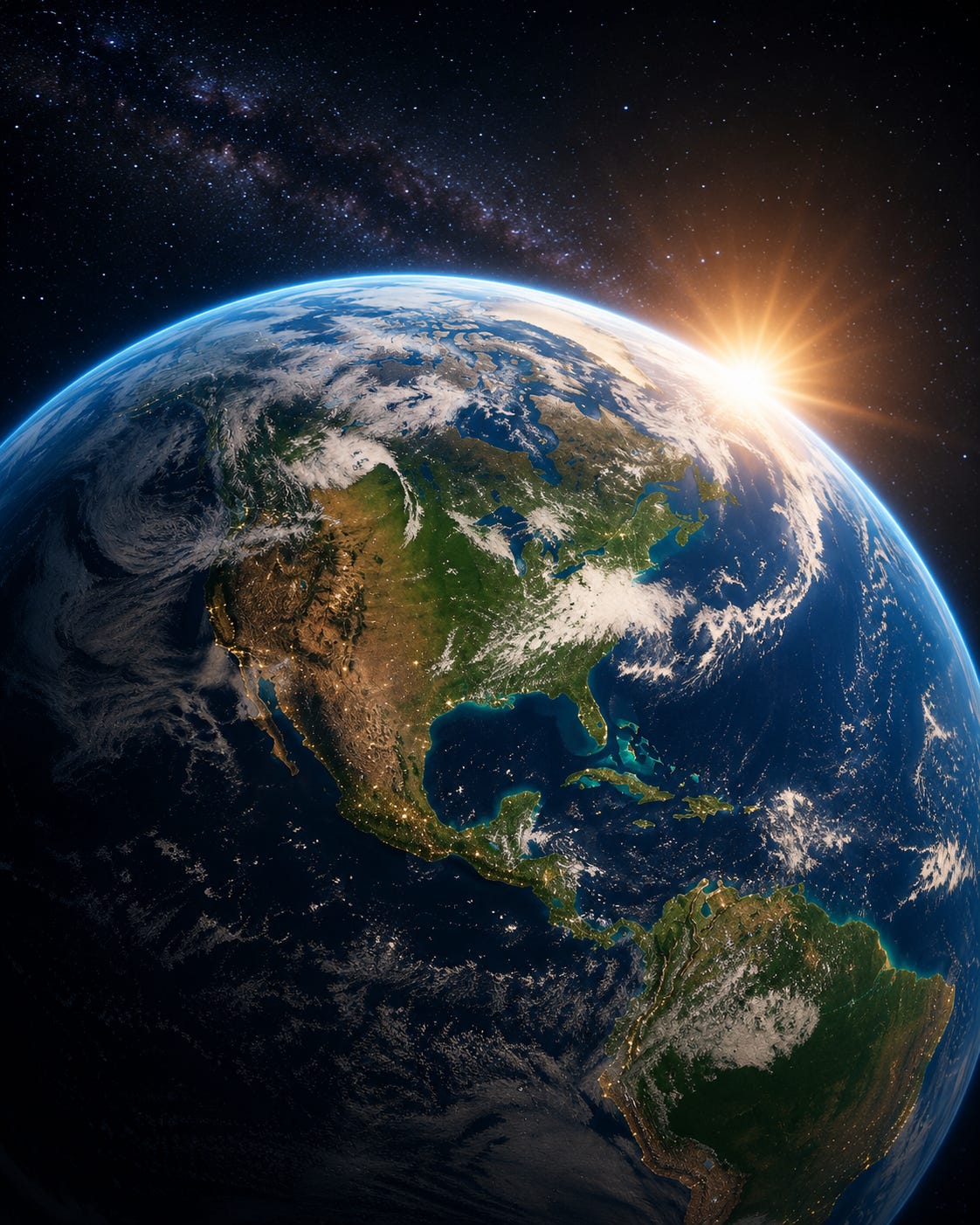
But I have to say, I tend to adhere to the Rare Earth philosophy. It comes from the book Rare Earth: Why Complex Life Is Uncommon in the Universe. It was written by a paleontologist and an astronomer, and it changed the way my ET-loving self viewed our place in the universe.
I won’t give you a step-by-step rundown of what changed my views, but I will share a bit. It is so easy to take so many things in our lives for granted. I have had friends suffer from chronic pain. It will make you realize what a gift it is to battle the minor aches and irritations most of us have. If we need milk, we go to the store. That simply wasn’t possible 150 years ago. By the same token, we view anything in the past as simple. Go check out the photos from Lewis Rutherfurd. They are of the moon, and they are stunning. What really makes it wild is he took them in 1865. We don’t even have that many good pictures of Abraham Lincoln, but his photos of our moon are amazing.
The number of things that had to happen for you to be reading this on a digital device right now is so high that they truly need to be classified as improbable at best. Now, I do agree that life may exist throughout the universe. The number of known galaxies is in the trillions, and each one of those has possibly billions of stars, and each of those stars could have a plethora of planets. Life is possible, and may be abundant. But intelligent life? Easy there, Hawking.
I can’t help myself with the nerd jokes.
We have yet to find even simple life in our own solar system. We are absolutely limited by our technology, and we do think there are some great chances we will find at least microbial life on the moons of Jupiter and Saturn. But we haven’t found it yet. And that’s in our own backyard. We have absolutely ruled out intelligent life. Insert your own joke about intelligence on Earth.
Keeping it local, Earth is habitable because we have Jupiter catching all of the solar system’s bullets that destroy a lot of planets. But a lot of astronomers think Jupiter’s original place in the solar system was way closer to the Sun. That’s where most gas giants are formed in other systems we have observed. Weirdly, we have three gas giants in a row, Saturn, Neptune, and everyone’s favorite pun, Uranus, hanging out in the boondocks, and they all had just enough gravity to get Jupiter to join their party. The most accepted theory on the creation of our own moon was that a body the size of Mars hit a glancing blow on the newly forming Earth. But not a direct blow, and not a ricochet that would have just bounced it off. It literally almost destroyed our planet, but there was just enough mass to keep it all together, and keep the remains of the other planet from escaping, and over time, that space trash formed into our moon. And it used to be uncomfortably close, but over time, it moved just far enough away to help create tides and have an influence on tectonic plates. It still is moving away at about an inch a year, so please plan accordingly. Earthquakes and volcanic eruptions are scary, but also necessary to keep a planet alive, and we need it alive.
Earth existed for a long time with nothing on it. And then a billion years ago, green algae developed in the ocean. Then roughly 500 million years ago, it migrated to the land and became plants. Which helped create oxygen. I’m skipping a lot of steps here, but we don’t really have time to cover 4 billion years of history. Even with AI (sorry, Claude). Then life happened. Maybe it started from the primordial soup; maybe it was carried on the back of a comet. We really don’t know what the first life was like because Earth was nasty, hot, temperamental, and getting pounded by objects being flung at it. There may have been different forms of life that would exist for a few hundred thousand years, or millions, and then get wiped out. Dinosaurs took hold. And it took a cataclysmic event to wipe them out. Heck, we even had cataclysmic events that almost wiped out humanity, and yet here we are.
If life exists in the universe, we don’t know if they got hit by a comet, a rogue planet, lost their atmosphere, or, learning from our own experiences, blew themselves up. And if they are out there, man, they are a long way away. When you hear the term light year, remember that it’s 5.88 trillion miles. So if something is 3 light years away, that doesn’t sound as daunting as nearly 18 trillion miles away. We think there might be a habitable planet at Proxima Centauri b, only 4.2 light years away. I doubt we will do brunch anytime soon. So if they are out there, the odds say we will never see them. And throw in the whole “the universe is expanding” idea; oh, plus it seems to be speeding up, and that commute just got rough.
I like my steaks medium rare, but I think I believe my Earth is rare. My inner nerd is a little disappointed, but my inner adult realizes something rare can be precious. I hope we all can learn to treat our home the way we would want others to.
If you’ve been enjoying the podcast, would you take three minutes to complete our listener survey? Thanks for being here. It matters more than you know.
Gary